Your homeowners insurance renewal arrives, the premium looks manageable, and the dwelling coverage shows a large dollar amount. Everything appears fine.
But imagine that a fire causes major damage and a contractor estimates that rebuilding your home would cost $475,000. Your policy’s dwelling limit is only $350,000.
That $125,000 difference may have to come from your savings, a loan, a smaller rebuild, or money you simply do not have.
This is what makes underinsurance so difficult. You can have an active policy, pay every premium on time, and still discover that the coverage is not enough when you need it most.
The good news is that you do not need to understand every page of insurance language to spot the most common warning signs. You can start with your declarations page, a few realistic estimates, and the checklist below.
Quick Answer: You may be underinsured if your policy limits would not be enough to rebuild your home, replace your belongings, cover temporary living expenses, or protect your finances after a liability claim. Common warning signs include outdated limits, unreported renovations, actual cash value coverage, unaffordable deductibles, missing disaster protection, and valuable belongings that exceed policy sublimits. You can use our free Insurance Coverage Gap Checker to identify areas of your policy that may deserve a closer review.
What Does Being Underinsured Mean?
Being underinsured means you have insurance, but the amount or type of coverage may not be enough for a serious covered loss.
For a homeowner, that could mean:
- Your dwelling limit is lower than the current cost of rebuilding the house.
- Your personal property coverage is not enough to replace your belongings.
- Certain valuable items have special limits that are lower than their actual value.
- Your temporary living expense coverage could run out before repairs are completed.
- Your liability limit is too low for the financial risk you face.
- A major risk, such as flooding, is excluded from your homeowners policy.
Underinsurance is not always caused by choosing an obviously low limit. The original estimate may have been reasonable when the policy started, but construction costs increased, the house was renovated, or the policy renewed for years without a detailed review.
In other cases, the total coverage amount looks adequate, but an exclusion, deductible, depreciation rule, or special limit creates an unexpected gap.
Is the Widely Repeated “60% of Homeowners Are Underinsured” Statistic Accurate?
You may have seen articles claiming that approximately 60% of homeowners are underinsured.
The problem is that underinsurance studies do not all measure the same thing. Some focus on homeowners who experienced total losses from wildfires. Others compare reconstruction estimates with dwelling limits or survey people affected by specific disasters.
That means a percentage from one study should not automatically be applied to every homeowner in every state.
The important point is not whether one national percentage is exactly right. The important point is that an active homeowners policy does not automatically prove that your limits are sufficient.
Your house, local building costs, belongings, deductible, exclusions, renovations, and financial situation determine whether your own coverage may be enough.
What Are the Main Signs That You May Be Underinsured?
1. Your Dwelling Limit Is Based on the Home’s Market Value
The cost of rebuilding your home is not the same as its selling price.
Market value includes factors such as:
- The value of the land
- The neighborhood
- Local real estate demand
- Nearby schools and amenities
- The home’s location
Rebuilding cost focuses on:
- Construction labor
- Building materials
- Demolition
- Debris removal
- Contractor charges
- Building permits
- Current building-code requirements
- The design and features of the house
A house that sells for $600,000 may cost less than that to rebuild because part of its value comes from the land. In another area, an older home worth $350,000 could cost more than $350,000 to reconstruct because of expensive materials or specialized workmanship.
The Insurance Information Institute recommends considering the home’s square footage, local construction costs, roof type, exterior materials, number of rooms, special features, and renovations when estimating rebuilding cost.
What to check: Find “Coverage A” or “Dwelling” on your policy’s declarations page. Ask your insurer how that amount was calculated and when the property information was last updated.
For a basic starting point, the Insurance Information Institute’s rebuilding guidance explains why the amount should be based on reconstruction costs rather than the home’s selling price.
2. You Renovated the Home but Never Updated the Policy
A finished basement, room addition, upgraded kitchen, new bathroom, enclosed porch, solar installation, custom flooring, or detached structure can change the cost of rebuilding your property.
Consider a homeowner who replaces a basic kitchen with custom cabinets, stone countertops, and built-in appliances. If the insurer still has the original builder-grade kitchen in its records, the reconstruction estimate may no longer reflect the actual home.
Even improvements that do not add much to the home’s selling price can increase the cost of repairing or rebuilding it.
What to check: Make a list of every major improvement completed since the policy started. Tell your insurance company about structural additions, finished spaces, expensive upgrades, and new detached structures.
Do not assume that the insurer automatically receives updated information from contractors, local authorities, or public property records.
3. You Have Not Properly Reviewed Your Policy in Several Years
Automatic renewal is convenient, but it can create a false sense of security.
During that time, you may have:
- Renovated your property
- Purchased new furniture
- Added expensive electronics
- Bought jewelry or collectibles
- Built a shed, garage, fence, or outdoor structure
- Started working or operating a business from home
- Changed how the property is occupied
- Increased your savings and other financial assets
Your insurer may also change deductibles, endorsements, exclusions, or settlement terms when the policy renews.
An automatic inflation adjustment can help, but it cannot correct inaccurate property information or improvements that were never reported.
What to check: Compare your latest declarations page and renewal notice with the previous year’s documents. Look for changes in premiums, limits, deductibles, exclusions, and endorsements.
Before renewing, use the free Insurance Renewal Checklist Generator to create a personalized list of policy limits, exclusions, cost changes, renovations, and questions to review.
4. Your Policy Uses Actual Cash Value Instead of Replacement Cost
These two terms can make a major difference after a claim.
Replacement cost value generally considers what it would cost to repair or replace damaged property with materials or items of similar kind and quality, subject to the policy’s limits and conditions.
Actual cash value generally subtracts depreciation for age, wear, condition, and useful life.
Suppose replacing a damaged roof would cost $18,000. If the policy settles the roof at actual cash value and assigns $8,000 in depreciation, the initial covered amount might be around $10,000 before applying the deductible.
The exact calculation will depend on the policy, roof age, damage, state requirements, and insurer.
The National Association of Insurance Commissioners explains that actual cash value coverage considers depreciation and may not provide enough to completely replace damaged property. Replacement cost coverage generally does not subtract depreciation in the same way, although limits and claim conditions still apply.
What to check: Search your policy for these terms:
- Replacement cost
- Actual cash value
- Depreciation
- Loss settlement
- Functional replacement cost
- Extended replacement cost
- Guaranteed replacement cost
Confirm which settlement method applies to the house, roof, and personal property. You can read the NAIC’s explanation of actual cash value and replacement cost for a beginner-friendly comparison.
5. You Do Not Know What Your Belongings Would Cost to Replace
Most people underestimate how much they own because they remember the expensive items but forget the hundreds of ordinary items throughout the house.
Walk through one bedroom and count the:
- Bed and mattress
- Clothing
- Shoes
- Curtains
- Lamps
- Electronics
- Bedding
- Furniture
- Bags
- Personal care items
Then repeat that process for the kitchen, living room, garage, bathrooms, storage areas, and outdoor spaces.
A kitchen alone may contain thousands of dollars in appliances, cookware, dishes, glassware, utensils, small electronics, food, and furniture.
Personal property coverage is often calculated as a percentage of dwelling coverage, but that automatic amount may not match what your household actually owns.
What to check: Create a room-by-room home inventory. Include photos, approximate purchase dates, serial numbers, receipts, model numbers, and estimated replacement costs where possible.
Our Insurance Document Checklist Generator can help you organize receipts, photos, proof of ownership, policy information, estimates, and other records that may be useful during a policy review or claim.
Keep a backup of the inventory somewhere outside the home or in secure cloud storage. A list stored only inside the damaged house may not be accessible after a major loss.
6. You Own Valuable Items but Have Never Checked the Special Limits
Having $150,000 of personal property coverage does not necessarily mean every possession is protected up to that total.
Homeowners policies frequently contain smaller limits, sometimes called sublimits or special limits of liability, for particular types of property.
These may include:
- Jewelry
- Watches
- Fine art
- Collectibles
- Cash
- Silverware
- Firearms
- Business equipment
- Computers
- Antiques
- Property kept away from the home
For example, someone may own an engagement ring worth $8,000 but have a much lower standard limit for jewelry theft. The overall personal property limit could be more than enough while the ring remains inadequately protected.
What to check: Look for sections titled “Special Limits of Liability,” “Property Limitations,” or “Scheduled Personal Property.”
Ask whether high-value items require an appraisal, endorsement, rider, or separate schedule.
7. You Could Not Comfortably Pay the Deductible
A high deductible is not the same as a low policy limit, but it can still leave you financially exposed.
Your deductible is the amount you are responsible for paying toward a covered loss before the insurer’s payment is calculated.
Take a homeowner with a $1,000 deductible and $800 in covered damage. Because the damage is below the deductible, there would generally be no claim payment.
Percentage-based deductibles can be even more surprising. A policy might use one deductible for ordinary losses and another for windstorm, hurricane, hail, or earthquake damage.
A 2% deductible on a $400,000 dwelling limit equals $8,000—not $2,000.
What to check: Identify every deductible in your policy and convert percentage deductibles into actual dollar amounts.
Ask yourself whether that money would be available immediately after a fire, storm, theft, or other emergency.
Use the Deductible vs Premium Calculator to compare how different deductible and premium amounts may affect your estimated yearly costs. The tool is educational and cannot calculate an exact claim payment, but it can make the cost trade-off easier to understand.
8. You Assume Homeowners Insurance Covers Every Natural Disaster
Standard homeowners insurance does not cover every cause of property damage.
FEMA states that most homeowners insurance policies do not cover flood damage. Flood insurance is generally purchased through a separate policy.
The source of water damage matters. Water from a burst pipe inside the home may be treated differently from rising water that enters the property from outside.
Other risks that may be excluded or require separate coverage include:
- Earthquakes
- Sewer or drain backup
- Sump-pump overflow
- Landslides
- Earth movement
- Sinkholes
- Certain windstorm or hurricane losses
- Gradual leaks
- Wear and tear
- Maintenance-related damage
What to check: Read the exclusions and ask your insurer specifically about flood, earthquake, sewer backup, sump-pump overflow, windstorm, hail, earth movement, and water damage.
Do not rely on someone simply saying that your home is “fully insured.” Ask which causes of loss are covered and which are excluded.
FEMA’s official flood insurance information can help you understand why homeowners insurance and flood insurance are not the same thing.
9. Your Temporary Living Expense Coverage Is Too Small
A serious covered loss may force you to live somewhere else while repairs are completed.
Additional living expense coverage, sometimes called ALE or loss-of-use coverage, may help with eligible increases in costs such as:
- Temporary housing
- Meals
- Storage
- Laundry
- Transportation
- Pet boarding
- Other necessary living expenses
However, this coverage can have a dollar limit, time limit, or both.
Imagine that repairs take 14 months because local contractors and building materials are difficult to find. A temporary living expense limit that looked generous at first may run out before the house is ready.
What to check: Find “Loss of Use” or “Additional Living Expense” on the declarations page and in the full policy.
Review its dollar limit, time limit, eligible expenses, documentation requirements, and conditions.
10. Your Liability Coverage Has Not Kept Up With Your Financial Life
Homeowners liability coverage may help when someone claims that you or a household member caused bodily injury or property damage.
Your liability exposure may change after:
- Installing a swimming pool
- Buying a dog
- Adding a trampoline
- Hiring household workers
- Regularly hosting guests
- Renting part of the property
- Accumulating more savings or investments
- Starting a home-based business
A liability limit selected years ago may no longer reflect your current property, activities, or financial assets.
What to check: Review the personal liability and medical payments limits. Discuss significant property features, household activities, rental use, and business activities with a licensed insurance professional.
How Can You Check for Underinsurance Step by Step?
Step 1: Collect the Full Policy
Start with:
- The declarations page
- The full policy form
- All endorsements
- The latest renewal notice
- Exclusion documents
- Deductible information
- Any appraisal or inspection reports
The declarations page provides a useful summary, but it does not contain every policy condition.
Endorsements can add, remove, or modify coverage, so they should not be ignored.
Step 2: Write Down the Main Limits
Record the amounts shown for:
- Dwelling
- Other structures
- Personal property
- Loss of use
- Personal liability
- Medical payments
- Scheduled valuables
- Water backup
- Building-code coverage
- Other optional endorsements
List every deductible separately.
Step 3: Estimate the Current Rebuilding Cost
Ask your insurer how the dwelling limit was calculated.
Confirm that its records include the correct:
- Square footage
- Number of bathrooms
- Roof type
- Exterior materials
- Foundation
- Basement
- Attached garage
- Detached structures
- Custom features
- Renovations
Do not include land value when estimating the basic cost of rebuilding the structure.
For a more detailed review, consider asking a qualified local contractor, appraiser, or licensed insurance professional about reconstruction costs in your area.
Step 4: Complete a Home Inventory
Record the contents of each room instead of estimating everything from memory.
Photos and videos are useful, but a stronger inventory also includes:
- Item descriptions
- Receipts
- Purchase dates
- Model numbers
- Serial numbers
- Estimated replacement costs
- Appraisals for valuable property
Update the inventory after making expensive purchases.
Step 5: Review Exclusions and Special Limits
Make a list of anything you assumed was covered but cannot clearly find in the policy.
Ask for written clarification when possible. Pay particular attention to:
- Water damage
- Roof settlement
- Jewelry
- Business property
- Short-term rental activity
- Home-sharing
- Vacant properties
- Flooding
- Earthquakes
- Sewer backup
- Wear and tear
Step 6: Test the Policy Against Realistic Scenarios
Ask yourself:
- What happens if the house has to be completely rebuilt?
- What happens if the roof needs to be replaced?
- What happens if floodwater enters the first floor?
- What happens if valuable jewelry is stolen?
- What happens if I must rent another home for a year?
- What happens if someone is seriously injured on my property?
- How much cash would I need before the policy starts paying?
- Which belongings would be settled after depreciation?
These questions are more useful than simply asking whether you have “good coverage.”
Step 7: Run a General Coverage Review
Use the Insurance Coverage Gap Checker to review whether outdated limits, life changes, deductibles, exclusions, missing records, or automatic renewals may require attention.
The checker cannot read your policy or confirm that you are fully insured. It gives you a practical list of areas to review with your insurance company or a licensed professional.
Step 8: Request a Professional Policy Review
Take your notes, property updates, home inventory, and questions to your insurance company or a licensed insurance agent.
Ask the professional to explain:
- How the dwelling estimate was calculated
- Whether inflation adjustments are included
- How roof claims are settled
- Which deductibles apply
- Whether renovations are properly recorded
- Whether valuables require additional coverage
- Which disasters are excluded
- Whether additional living expense limits are adequate
Do not be embarrassed to ask for plain-English explanations. You are not expected to understand unfamiliar policy wording without help.
What If You Discover the Problem After Damage Has Already Happened?
Do not assume that being worried about a coverage gap automatically means your claim will be denied.
Claim decisions depend on the cause of damage, policy language, exclusions, coverage dates, deductibles, documentation, and facts of the loss.
Before filing:
- Review the policy and declarations page.
- Confirm that the policy was active on the date of loss.
- Photograph or record the damage where it is safe to do so.
- Take reasonable steps to prevent further damage.
- Keep damaged property unless the insurer instructs otherwise or it creates a safety risk.
- Save receipts for emergency repairs and temporary expenses.
- Ask the insurer about deadlines and required documents.
You can use the Insurance Claim Denial Risk Checker to review common issues such as missing documents, policy exclusions, deadlines, inactive coverage, and insufficient proof.
Our guide on why insurance claims get denied also explains seven common claim problems and the practical steps policyholders can take before and after filing.
Neither resource can predict the insurer’s decision, but they can help you prepare better questions and records.
What Common Mistakes Should You Avoid?
Assuming the Insurer Automatically Knows About Renovations
Your insurance company may not know that you added a bathroom, finished the basement, replaced basic materials with custom finishes, or built a detached office.
Report material changes instead of assuming public records or an inspection will update the policy automatically.
Choosing Coverage Based Only on the Lowest Premium
A cheaper policy may have:
- A higher deductible
- Lower coverage limits
- Actual cash value settlement
- Fewer endorsements
- Broader exclusions
- Lower special limits
- Less protection for water or roof damage
Compare what the policy covers, not only what it costs.
Using the Mortgage Balance as the Coverage Target
Your mortgage balance is the amount you owe the lender. It is not an estimate of demolition, labor, materials, permits, and reconstruction.
A nearly paid-off home can still be extremely expensive to rebuild.
Assuming Every Belonging Is Covered by the Personal Property Limit
The total personal property limit does not remove special limits for jewelry, cash, collectibles, business equipment, and other categories.
Read the special-limits section before assuming an expensive item is fully protected.
Counting on Government Assistance to Replace Insurance
Disaster assistance is not a guaranteed substitute for adequate insurance.
Availability and eligibility depend on the event, government declarations, program requirements, household circumstances, and the type of damage.
Ignoring Percentage Deductibles
A percentage can appear small until you convert it into dollars.
Calculate every percentage deductible using the amount identified in your policy.
Forgetting Detached Structures
Garages, sheds, fences, gazebos, retaining walls, driveways, and other structures may have separate limits or restrictions.
Confirm whether the automatic “other structures” limit reflects what is actually on your property.
Waiting Until After a Loss to Read the Policy
After a fire, storm, theft, or water loss, you may already be dealing with safety concerns, repairs, temporary housing, and documentation.
A calm annual review is much easier than discovering unfamiliar exclusions in the middle of a claim.
What Questions Should You Ask Your Insurance Company?
You do not need to use technical insurance language. Ask direct questions and request written answers where possible:
- What rebuilding cost is my dwelling limit based on?
- When was the rebuilding estimate last updated?
- Which details about my house were used?
- Does my dwelling coverage use replacement cost or actual cash value?
- How is roof damage settled?
- Do I have extended replacement cost coverage?
- Is building-code or ordinance coverage included?
- What kinds of water damage are excluded?
- Do I have separate wind, hurricane, hail, or earthquake deductibles?
- What special limits apply to jewelry, electronics, collectibles, or business property?
- How much loss-of-use coverage do I have?
- Is there a time limit for temporary living expenses?
- Should my renovations or detached structures be added?
- Which changes should I report before my next renewal?
- What records would I need after a major property claim?
Insurance rules and consumer protections vary by state. Your state’s Department of Insurance can provide official consumer information and explain how to submit a complaint or request assistance.
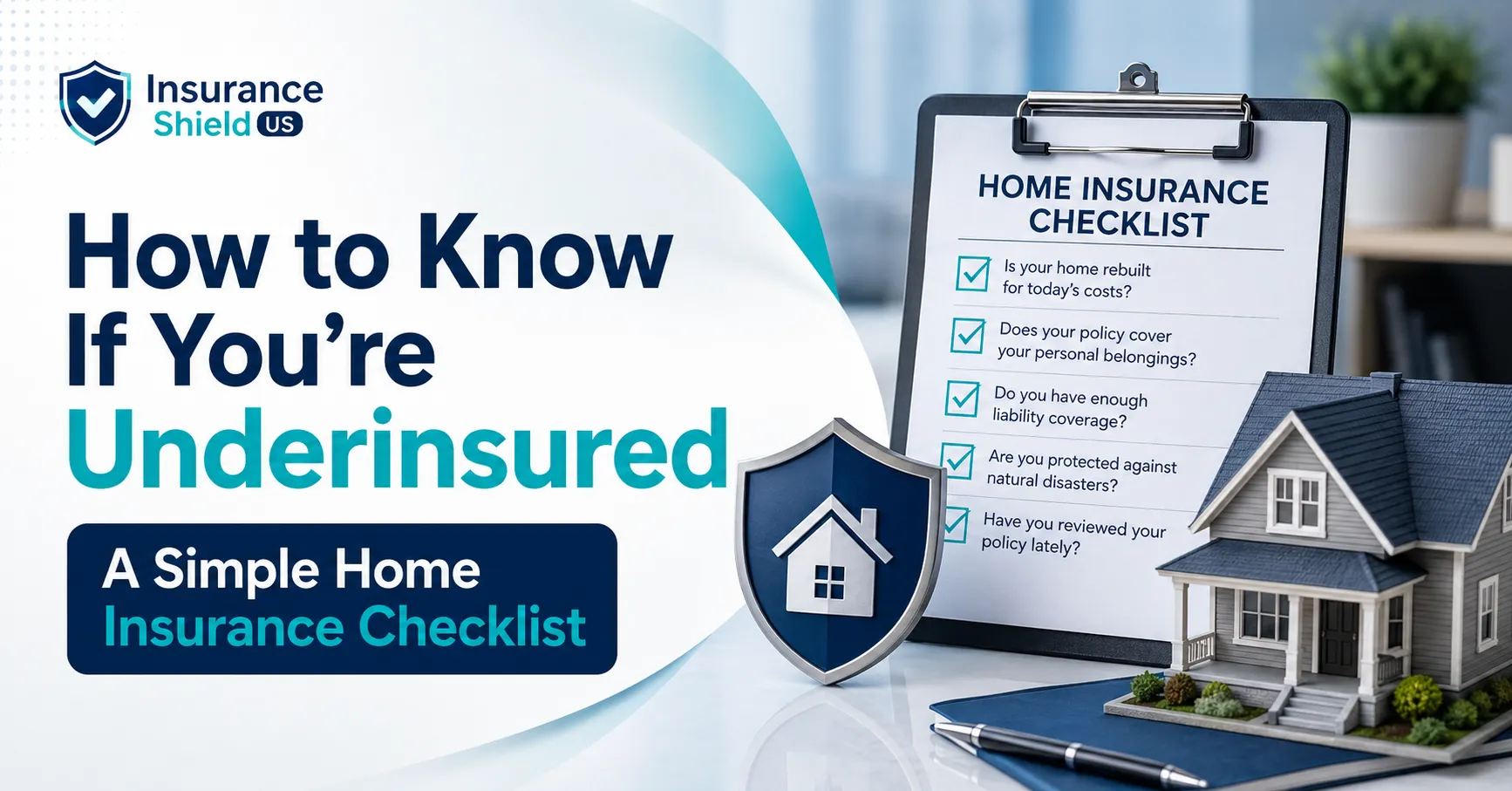
A Simple Annual Underinsurance Checklist
Review these items at least once a year and after any major property or household change:
- Confirm the current dwelling limit.
- Ask how the rebuilding estimate was calculated.
- Report renovations and new structures.
- Review replacement cost and actual cash value terms.
- Update your home inventory.
- Check special limits for valuables.
- Calculate every deductible in dollars.
- Review flood, earthquake, and water exclusions.
- Check temporary living expense limits.
- Review liability coverage.
- Read all renewal changes.
- Store policy records somewhere safe.
- Ask questions about anything you do not understand.
You can find all five educational resources in the Insurance Shield US Free Insurance Tools Hub, including tools for coverage gaps, deductibles, policy renewal, claim risks, and document preparation.
The Bottom Line
You cannot tell whether you are properly insured just by checking that your policy is active or that the dwelling limit looks large.
The real question is whether your policy’s limits and terms reasonably match what it would cost to rebuild your home, replace your possessions, live somewhere else during repairs, pay the deductible, and manage a serious liability claim.
Start with the declarations page. Update the home’s construction details, document renovations, create a home inventory, calculate each deductible in dollars, and review the exclusions.
Then ask your insurer or a licensed professional to explain anything that remains unclear.
You may discover that your existing coverage is reasonable. You may also find one or two gaps that deserve attention before a loss occurs.
Either result is better than waiting until a claim to discover what the policy does not cover.
Educational Disclaimer
This article is provided for general educational and informational purposes only. It is not insurance, legal, financial, tax, or policy-specific advice.
Insurance coverage, exclusions, claim rules, deductibles, limits, and consumer protections vary by policy, insurer, and state. Review your actual policy documents and consult your insurance company, a licensed insurance professional, attorney, financial advisor, or state insurance department regarding your individual situation.

I’m Muhammad Waqas, the creator of Insurance Shield US. I write simple insurance guides, checklists, and tool-based content to help everyday readers understand coverage gaps, claim risks, policy documents, and renewal mistakes. My content is for educational purposes only and does not replace advice from a licensed insurance professional.